

A young woman watching a sunrise with a clear sky and small clouds

Exposure to air pollution can affect everyone’s health. When we breathe, pollution enters our lungs and can enter our bloodstream. Air pollution can contribute to small annoyances like coughing or itchy eyes. It can also cause or worsen many diseases involving the lungs and breathing. 

No matter where you live, you can be exposed to air pollution. The type and amount of exposure varies depending on your location, the time of day, and even the weather. Exposure to air pollution is higher near pollution sources like busy roadways or wood-burning equipment. Many of our daily activities expose us to higher levels of air pollution. Idling cars, gas-fueled equipment and chemicals we use in our homes all contribute to overall air pollution and expose us to harmful air pollutants.

Populations most at risk of health problems related to air pollution

People’s health risk from air pollution varies widely depending on age, where they live, their underlying health, and other factors. 

  • People with lung diseases, such as asthma, chronic bronchitis, emphysema and chronic obstructive pulmonary disease
  • Infants and young children
  • People who work or exercise outdoors
  • Adults over 65
  • People with a cardiovascular disease
  • People who lack access to health care
  • People who smoke or are exposed to second-hand smoke
  • People working in occupations where there is high exposure to contaminated air
  • People who spend a lot of time near busy roadways

Your exposure to air pollution can change 
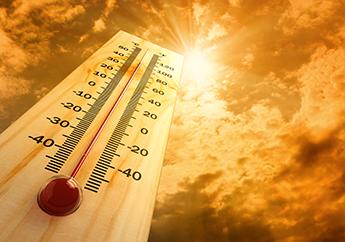
a thermometer displaying high temperatures underneath a bright yellow sun

On any given day, the types and amounts of pollution we breathe vary by our location, the time of day and even the weather.

Proximity - Air pollution levels are higher the closer you are to an emissions source. For most of us, our highest exposure to air pollution occurs near busy roadways. But it could be a burn barrel or backyard fire pit, too.

Time and season - Fine particle levels are often highest in the morning, but can be elevated at any time of the day. Ozone is a summertime pollutant. Ozone levels are highest in the afternoon and evening.

Temperature - Fine particle levels often increase during unseasonably warm winter days. Most unhealthy ozone days occur when daytime high temperatures exceed 90 degrees.

Weather - On days with fog, light or no wind or temperature inversions, weather conditions can allow pollution to build to unhealthy levels.

Human health effects of the six criteria pollutants

The primary standards established for the criteria pollutants have specific health effects. The secondary standards are currently set at the level of the primary standard or at levels higher than the primary standard so generally the human health effects of air pollution are driving mitigation strategies. Click through the tabs below to learn more about the human health effects of the six criteria pollutants.

Ozone

Ozone can be good or bad for health and the environment depending on where it’s found in the atmosphere. Stratospheric ozone protects living things from ultraviolet radiation from the sun. Ground-level ozone can trigger a variety of health concerns.

Exposure to ground-level ozone can contribute to health and environmental problems. Ground-level ozone can irritate the eyes, nose and throat, damages lung tissue and aggravates asthma and other respiratory diseases, including bronchitis. Ozone can trigger a variety of health problems. Those most susceptible to ozone include children, the elderly and individuals with pre-existing respiratory problems. Children are at increased risk from exposure to ground-level ozone because their lungs are still developing and many spend a large amount of time outdoors. Healthy adults can experience problems breathing, especially those who exercise or work outdoors when ozone levels are high.

For information about today's air quality forecast, visit Current Air Quality.

Lead

People can breath in airborne lead, Pb, or ingest it after it settles onto surfaces or soils. Lead exposure is associated with several health effects that have an adverse impact on kidney function, the cardiovascular system, central nervous system, immune system and reproductive and developmental systems. Lead exposure also affects the oxygen carrying capacity of the blood. Once taken into the body, lead is rapidly absorbed into the bloodstream and distributed throughout the body. Lead accumulates in the bones. The effects of lead exposure most commonly encountered in current populations are neurological effects in children and cardiovascular effects (e.g., high blood pressure and heart disease) in adults. 

Children are more susceptible to the damaging effects of airborne lead than adults because they breathe in more air per minute, typically spend more time outdoors, and exhibit greater hand-to-mouth activity than adults. Children are also more vulnerable to the health effects of lead because their minds and bodies are developing rapidly. Infants and young children are especially sensitive to even low levels of lead, which may contribute to behavioral problems, learning deficits and lowered IQ.

Sulfur Dioxide

Short-term exposures to sulfur dioxide, SO2, can harm the human respiratory system and make breathing difficult. People with asthma, particularly children, are sensitive to these effects of SO2.

High concentrations of SO2 in the air generally also lead to the formation of other sulfur oxides, SOx. Sulfur oxides react with other compounds in the air to form small particles, which contribute to particulate matter air pollution. Small particles may penetrate deeply into the lungs and in sufficient quantity can contribute to health problems.

Nitrogen Dioxide

Breathing air with a high concentration of nitrogen dioxide, NO2, can irritate airways in the human respiratory system. Such exposures over short periods can aggravate respiratory diseases, particularly asthma, leading to respiratory symptoms such as coughing, wheezing or difficulty breathing. Longer exposures to elevated concentrations of NO2 may contribute to developing asthma and potentially increase susceptibility to respiratory infections. People with asthma, as well as children and the elderly, are generally at greater risk for the health effects of NO2.

NO2 along with other nitrogen oxides, NOx, react with other chemicals in the air to form both particulate matter and ozone. Both of these are also harmful when inhaled due to effects on the respiratory system.

Carbon Monoxide

Breathing air with a high concentration of carbon monoxide, CO, reduces the amount of oxygen that can be transported in the blood stream to critical organs like the heart and brain.

At very high levels, which are possible indoors or in other enclosed environments, CO can cause dizziness, confusion, unconsciousness and death.

Very high levels of CO are not likely to occur outdoors. However, when CO levels are elevated outdoors, they can be of particular concern for people with some types of heart disease. These people already have a reduced ability for getting oxygenated blood to their hearts in situations where the heart needs more oxygen than usual. They are especially vulnerable to the effects of CO when exercising or under increased stress. In these situations, short-term exposure to elevated CO may result in reduced oxygen to the heart accompanied by chest pain also known as angina.

Particulate Matter

Particulate matter (PM10) contains microscopic solids or liquid droplets that are so small that they can be inhaled and cause serious health problems. Some particles less than 10 micrometers in diameter can get deep into your lungs and some may even get into your bloodstream. Of these, particles less than 2.5 micrometers in diameter, (PM2.5) pose the greatest risk to health. PM10 is also inhalable.

Inhaling high concentrations of particulate matter has been associated with an increased risk of heart attacks, acute and chronic bronchitis, asthma attacks and other respiratory issues for individuals with pre-existing heart or lung conditions. 

For information about today's air quality forecast, visit Current Air Quality.