
Division of Environmental Quality Director: Art Goodin
This guidance document is for agricultural anhydrous ammonia facilities that use nurse tanks or farm wagons for transporting anhydrous ammonia. This is intended to clarify the requirements nurse tanks must meet for compliance with Missouri Department of Natural Resources Risk Management Program inspections.
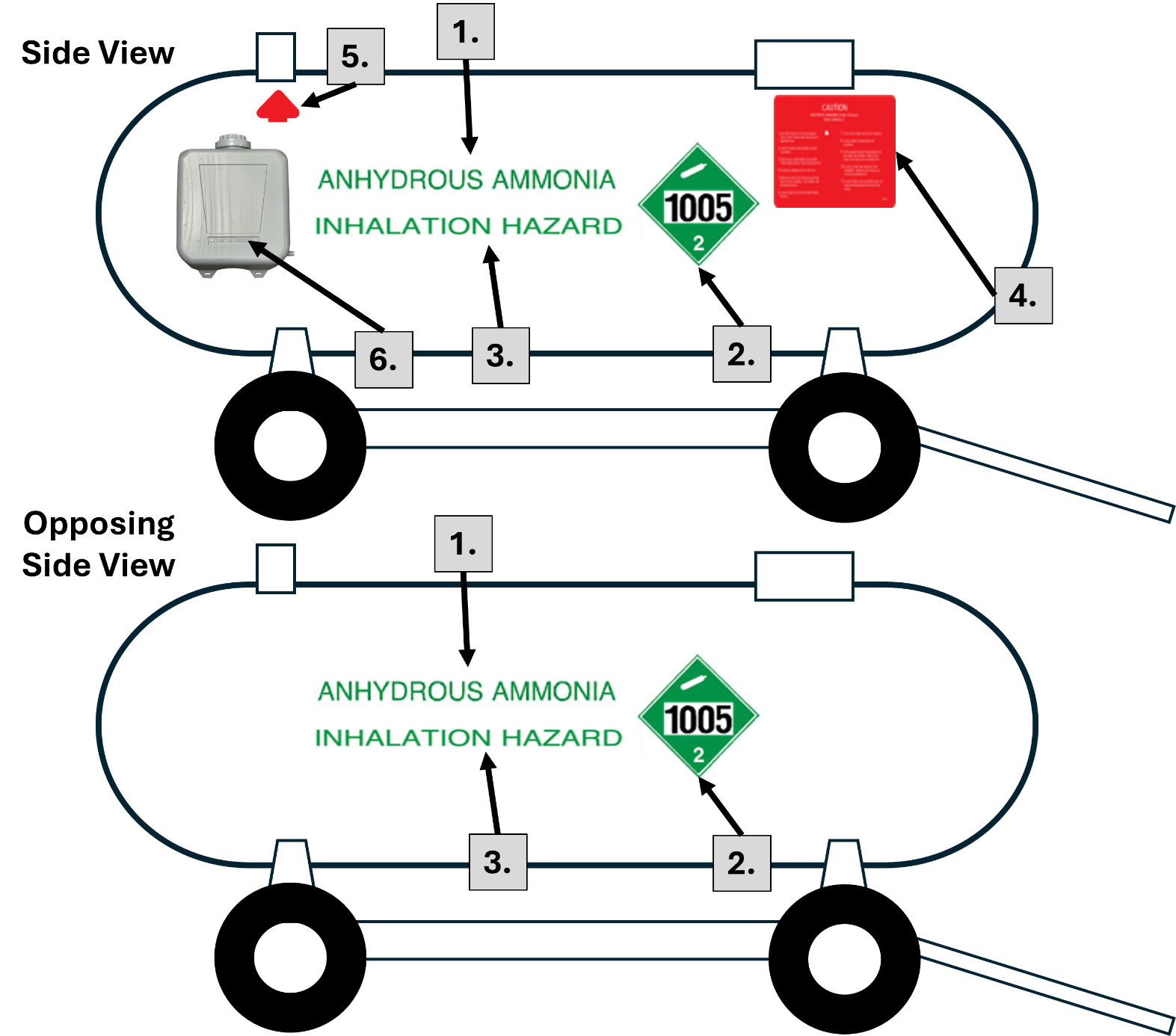
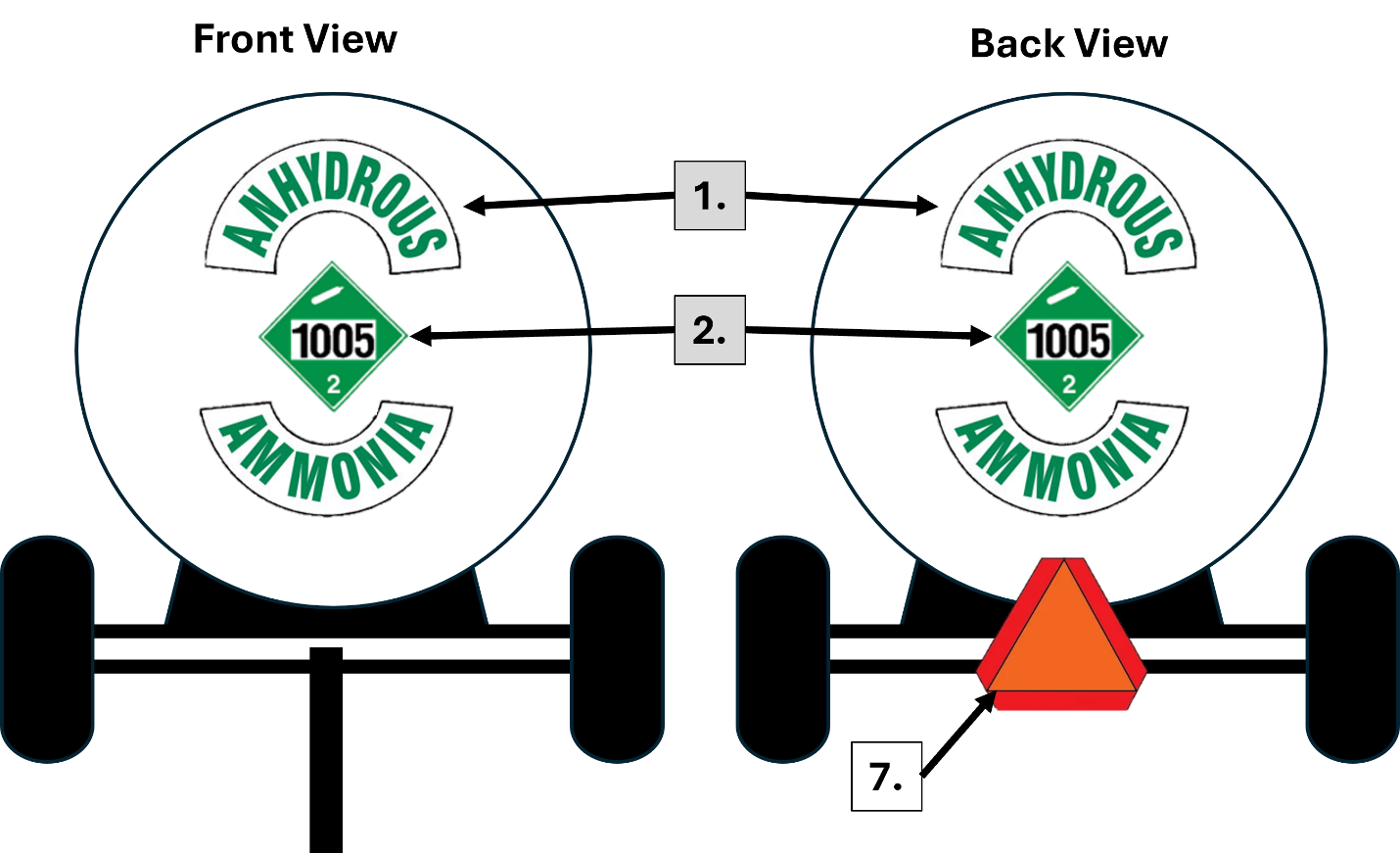
As required by CGA G-2.1-2023 - Requirements for the Storage and Handling of Anhydrous Ammonia, each nurse tank 1000-gallons or larger must display the following markings. Lettering must be at least 2-inches high.
| Diagram Label | Marking | Location |
|---|---|---|
| 1. | ANHYDROUS AMMONIA text | Each end and each side - four stickers total* |
| 2. | UN 1005 placard | Each end and each side - four stickers total* |
| 3. | INHALATION HAZARD text | Each side - two stickers total |
| 4. | First aid procedures sticker | One side - one sticker total |
| 5. | Arrow pointing to pressure relief/ pop-off valve | One side - one sticker total |
| 6. | Five-gallon safety water tote containing clean water | Any reasonable location on tank or running gear - one per tank |
| 7. | Slow moving vehicle (SMV) emblem | Rear end - one emblem |
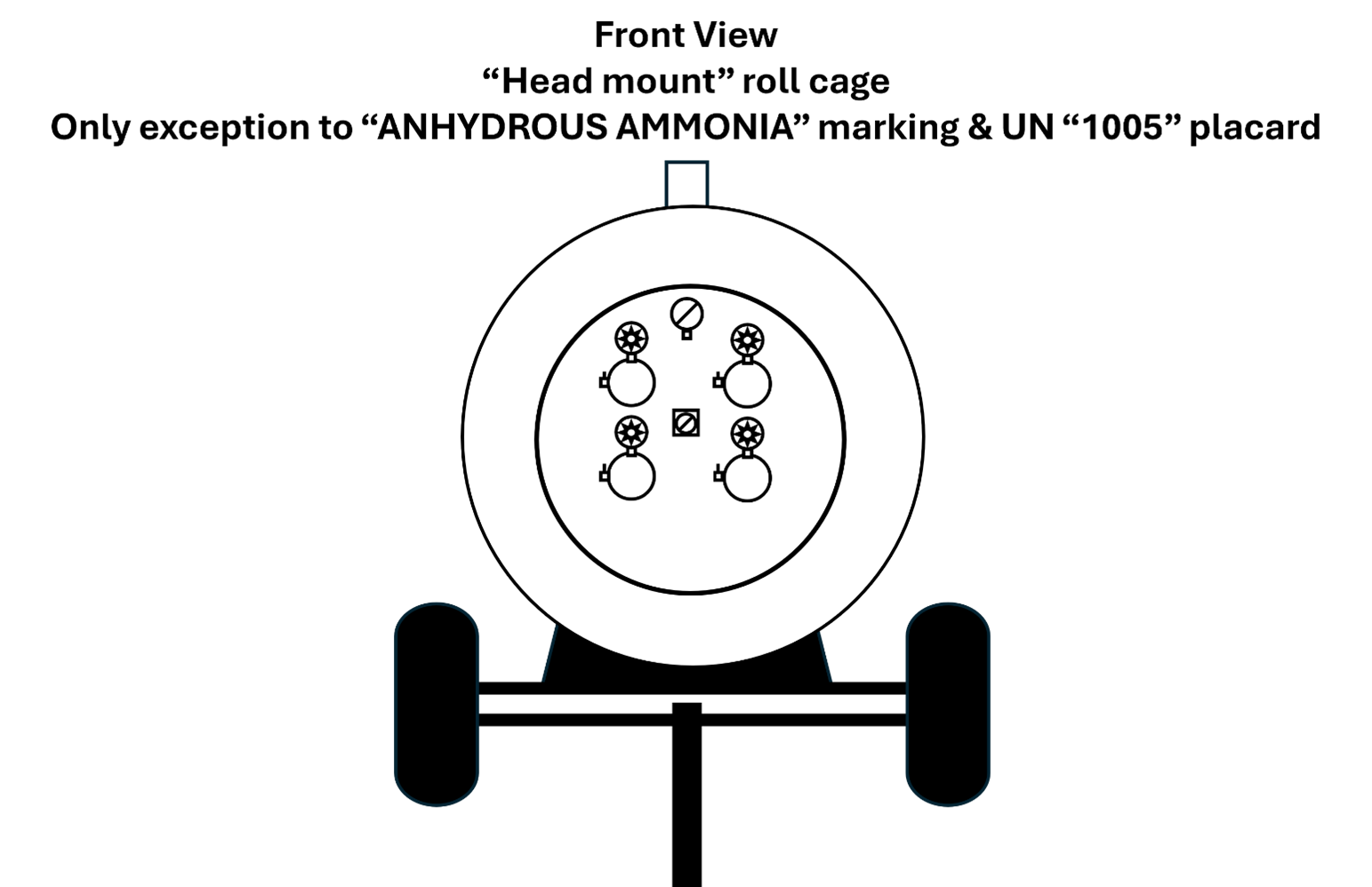
*Exceptions for tanks with valves, fitting, regulators or gauges on one end – i.e., head mount roll cage. These tanks do not need to be marked or placarded on this side. See diagram above for example.
The images and information in this guidance only represent the requirements in CGA G-2.1-2023 – Requirements for the Storage and Handling of Anhydrous Ammonia–7th Edition, the American National Standard for the design, construction, repair, alteration, location, installation and operation of anhydrous ammonia systems. These requirements are codified in Code of State Regulations 10 CSR 10-6.255 as the recognized and generally accepted good engineering practice for agricultural anhydrous ammonia facilities in the state of Missouri. There could be additional standards and regulations required by government agencies outside of the Missouri Department of Natural Resources that are not represented in this guidance document.
Nothing in this document may be used to implement any enforcement action or levy any penalty unless promulgated by rule under chapter 536 or authorized by statute.
For more information
Air Pollution Control Program
Division of Environmental Quality
P.O. Box 176
Jefferson City, MO 65102-0176
United States