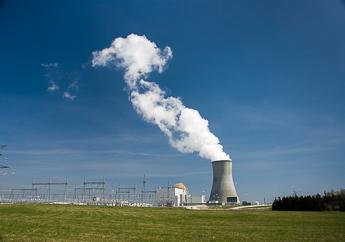
Nuclear energy is a low-carbon energy source. The nuclear fission process does not release greenhouse gasses like carbon dioxide during its operation. Although mining, processing and storing waste for nuclear energy produces some emissions, it is still significantly lower than burning fossil fuels.
Nuclear energy is stable and reliable. Nuclear energy is produced in generating power plants — much like gas and coal power plants — that can operate around the clock. These energy sources are not dependent on wind, sun or rainfall to produce electricity. Although it may take 12 hours or more for a nuclear plant to reach full operational capacity, it can be shut down within seconds.
Nuclear energy is powerful and efficient and nuclear fuel is very energy dense. For example, a single uranium fuel pellet — about the size of a pencil eraser — contains as much energy as one ton of coal, 149 gallons of oil, or 17,000 cubic feet of natural gas. Because nuclear fission is nearly 8,000 times more efficient than traditional fossil fuels, less fuel is required to power the plant and less waste is produced.
Is it safe to live next to a nuclear power plant?
The federal Nuclear Regulatory Commission oversees the safety of the country’s nuclear reactors, including the reactor in Callaway County, Missouri. Reactors in the United States have numerous safety features and are hardened against natural disasters and human intrusion. Although nuclear accidents have occurred in the past, they have been extremely rare around the world. Nuclear generation continues to grow safer as technology and safety efforts increase.
How much nuclear power is produced in Missouri?
There is one nuclear power plant in Missouri. Ameren Missouri’s Callaway Energy Center produced over 14% of the electricity made in Missouri in 2024, and its output is enough to power 780,000 average households.
How is nuclear waste disposed of?
The Callaway Energy Center, Missouri’s only nuclear power plant, stores “high-level” nuclear waste and “low-level” nuclear waste differently. High-level nuclear waste is radioactive nuclear fuel that has been removed from the nuclear reactor and contained in fuel rods. These rods are temporarily stored in a spent fuel pool, a stainless steel-lined water pool the size of a tennis court where the radioactive fuel will lose 90% of its radioactivity in the first year of storage. After the fuel has cooled, the spent fuel is then moved to concrete-and-steel containers called dry casks. These are sturdy structures that are built to survive natural disasters, human intrusion and other unusual scenarios.
Low-level radioactive waste includes disposable items such as protective clothing, filters and tools that have become contaminated in working with radioactive material. Ninety-five percent of low-level waste is Type A, which has the lowest amount of radioactivity, and is shipped to a disposal facility in Utah. The other five percent is stored on-site. Low-level disposal sites continue to advance as hospitals, research laboratories, nuclear plants and manufacturing facilities seek safe, low-level waste disposal. Learn more about nuclear waste disposal in Ameren Missouri's Callaway Plant Environmental Facts sheet.
Can nuclear materials be used in medicine?
Yes. Certain nuclear products can be used for diagnosis and imaging, radiotherapy and medical equipment sterilization. The University of Missouri Research Reactor (MURR®) is one of the most powerful university research reactors in the United States and a major source of medical nuclear products.
What are the environmental impacts of nuclear power?
Conventional nuclear power plants do not produce carbon emissions during their operation. They do, however, require water for operations and cooling. Most of the water that meets the radioactive elements is in a closed cycle and will never be released to the environment. Thermal pollution, however, is the discharged heated water which poses the largest environmental concern. This is similar to any other power plant that uses water as a cooling agent. Most of nuclear energy’s emissions come from mining and refining uranium. Nuclear reactors also produce radioactive waste from their operations; however, nuclear power plants emit less radiation into the surrounding environment than coal-fired power plants.
In July 2025, the department, in partnership with the National Governors Association, hosted a state-level nuclear summit. The goal of this summit was to elevate the discussion on nuclear energy in Missouri to meet the increased demand for reliable power generation and to decrease air emissions. More information can be found on the Missouri Nuclear Summit web page.
In Missouri
Ameren Missouri recently announced plans to add 1,500 MW of new nuclear generation by 2040. The company also expects to seek an extension of the operating license for its Callaway nuclear plant beyond 2044.
In response to increasing global demand for medicinal radioisotopes, the University of Missouri is currently developing the NextGen MURR to continue to perform cutting edge, advanced research in the field of nuclear medicine. The new reactor will have twice the power of its current facility, although it will not be used for power generation.
In the United States
Elsewhere in the United States, there is an increased interest in nuclear power to meet growing electricity demand safely and reliably. The Executive Orders titled Unleashing American Energy and Declaring a National Energy Emergency both promote domestic energy production and nuclear resource development, sparking nuclear conversations across the nation.
Aside from Missouri, other states are participating in the nuclear arena. In Georgia, Plant Vogtle expanded to include two new nuclear units, making the plant the largest nuclear energy generator in the country. Tennessee is also advancing multiple nuclear power plant projects, including a potential small modular reactor development at the Clinch River Nuclear site. Crane Clean Energy Center in Pennsylvania is being restored and is expected to be back online by 2028.
Around the World
The United States leads the world in nuclear energy consumption. China, France, Russia and South Korea are also major nuclear consumers and producers of nuclear energy. Globally, over 30 countries operate nuclear power plants.
With nuclear innovation expanding, many new reactor designs are under consideration around the world. Some of these new designs could allow for smaller, standardized reactors with improved safety features.